
Generator Installation Oklahoma City: The #1 Choice for Storm‑Ready Homes in OKC

Summary
This guide explains why Generac is the leading standby generator solution for Oklahoma City properties, how systems work, sizing and cost basics, install steps, upkeep, and how to select a qualified pro.
Introduction
Oklahoma weather punishes the grid. Outages from tornadoes, ice, and summer load spikes can cut power to entire neighborhoods and key business corridors. A standby generator keeps your property running without hassle or fuel runs.
Below you’ll find clear answers on sizing, costs, install timelines, fuel, maintenance, and how to select a Generac-certified electrician. For service and guidance, HotRod’s Electrical Services supports residential and commercial projects across Oklahoma City, Edmond, Norman, Moore, and Midwest City. If you’re exploring a reliable generator installation Oklahoma City option, start here with confidence.
Generac generator Oklahoma City
Generac dominates standby power for a few practical reasons: nationwide parts and service coverage, proven reliability in extreme temps, smarter load management, and tight integration with automatic transfer switches (ATS). In OKC, these benefits matter during sudden, prolonged outages.
Why Generac fits Oklahoma conditions
- Cold- and heat-ready: Factory cold-weather kits and robust ventilation design handle Oklahoma’s winter lows and summer highs.
- Load management: Intelligent modules prioritize critical circuits when capacity is tight.
- Serviceability: Fast access to parts and trained techs limits downtime during peak storm season.
- Remote monitoring: Mobile monitoring options streamline maintenance and alerting.
When neighbors lose power, a Generac generator Oklahoma City installation turns on automatically and keeps your home or business stable with no extension cords or manual refueling.
Why Backup Power Matters in Oklahoma
- Tornadoes: Spring supercells can damage lines and transformers across wide areas.
- Ice storms: Glaze ice collapses limbs and distribution lines, causing multi-day outages.
- Heat waves and grid strain: High AC demand drives rolling or sudden outages.
Jan–Mar:  ▆▆ (wind, freeze)
Apr–Jun:  ▆▆▆▆▆ (tornado season)
Jul–Aug:  ▆▆▆ (heat and load)
Sep–Oct:  ▆ (storms)
Nov–Dec:  ▆▆ (ice and wind)
Reliable backup power protects HVAC, cold storage, sump pumps, medical devices, security systems, and point-of-sale systems.
Residential and Commercial Outage Needs
Homes
- HVAC: Keep indoor temps safe for kids, seniors, and pets.
- Refrigeration: Avoid food loss and restocking costs.
- Medical devices: Ensure uninterrupted operation for critical equipment.
- Security and lighting: Maintain alarms, exterior lights, and cameras.
Businesses
- Continuity: Keep POS, networking, and phones on for revenue and service.
- Inventory and process protection: Prevent spoilage and downtime.
- Safety: Maintain emergency lighting, exit signs, and access control.
- Data integrity: Protect servers, storage arrays, and VoIP.
During long outages, a Generac generator Oklahoma City solution preserves operations at restaurants, clinics, retail, light industrial, and professional offices.
How Standby Generators Work
- Automatic Transfer Switch (ATS): Monitors utility power. If the grid fails, ATS starts the generator and switches the load to generator power within seconds. When the grid returns, ATS reconnects utility power and cools down the generator.
- Fuel: Most residential units run on natural gas or propane. Commercial systems may use natural gas, propane, or diesel, depending on code and runtime needs.
- Load management: Optional modules shed or delay heavy loads (e.g., second AC, water heater) to keep essential circuits online without oversizing.
- Continuity: No refueling runs, no extension cords. The system tests itself weekly.
Cost vs. Risk of Delay
- Emergency repairs: After a storm, service costs spike and wait times grow.
- Insurance deductibles: Claims rarely cover food loss, business downtime, or all equipment damage.
- Property damage: Sump failures, frozen pipes, and heat-related damage add up quickly.
- Revenue loss: For businesses, even a few hours offline can exceed an annualized generator payment.
Priced against outage risks, a properly sized system is a pragmatic investment. A Generac generator Oklahoma City install often pays for itself after one or two extended outages.
Load Sizing and Options
Right-size the generator
Size to your actual loads, not just square footage. Consider HVAC tonnage, well pumps, refrigeration, medical or IT equipment, and process loads. Load management can reduce required kW without sacrificing essentials.
Typical Sizing Examples (Illustrative)
| Property | Key Loads | Estimated Size |
|---|---|---|
| 1,800–2,200 sq ft home | 1 AC, fridge, lights, outlets, Wi‑Fi, gas furnace blower | 14–18 kW (air‑cooled) |
| 2,800–3,500 sq ft home | 2 ACs, fridge/freezer, lights, outlets, Wi‑Fi, gas furnace blowers | 20–26 kW (air‑cooled) |
| Large home or small office | 3+ ACs, server/network, pumps, multiple fridges | 24–38 kW (air‑cooled or small liquid‑cooled) |
| Commercial suite/light industrial | Multiple HVACs, POS, lighting, IT racks, process loads | 48–150 kW (liquid‑cooled) |
Air‑Cooled vs. Liquid‑Cooled
- Air‑cooled (10–26 kW): Cost‑effective, quick to install, ideal for most homes and small offices.
- Liquid‑cooled (25–150+ kW): Quieter at higher loads, supports heavier runtimes and larger properties.
ATS Options
| ATS Type | Use Case | Notes |
|---|---|---|
| Essential‑circuit ATS | Keep select circuits on | Lower generator size; add load management as needed |
| Whole‑home ATS (service‑rated) | Entire panel coverage | Clean install; supports seamless lifestyle |
| Smart ATS + load modules | Dynamic prioritization | Delays large loads to avoid oversizing |
Electrical Panel Compatibility
Most modern 200A/100A panels integrate cleanly with a service‑rated ATS. Your electrician will verify:
- Main breaker rating and available spaces
- Split‑bus or obsolete panels (may require upgrades)
- Double‑lugging or tandem breaker issues that must be corrected
- Grounding/bonding integrity for NEC compliance
Older homes may need a service upgrade or panel replacement to ensure safe transfer and clear labeling. In commercial settings, multi‑panel and three‑phase configurations require correct ATS selection and coordination.
Storm Season Prep + General Electrical Tips
Before severe weather, back up data, test sump pumps, replace smoke/CO batteries, and review generator readiness. For a practical OKC checklist and everyday safety tips, see Top Electrical Tips from a Trusted Electrician in Oklahoma City: Electrical tips and storm prep guide.
- Scan trees for limbs over service drops
- Label essential circuits and critical devices
- Stage surge protection for sensitive electronics
- Confirm gas meter capacity and regulator type if using natural gas
- Keep propane tanks filled to winter levels
Generator Installation Process
- Site consultation: Evaluate loads, panel(s), gas supply, placement, and noise considerations.
- Proposal and permits: Define scope, ATS type, concrete pad, fuel connection, and inspection steps.
- Gas line coordination: Size and install new gas line or verify propane tank and regulators.
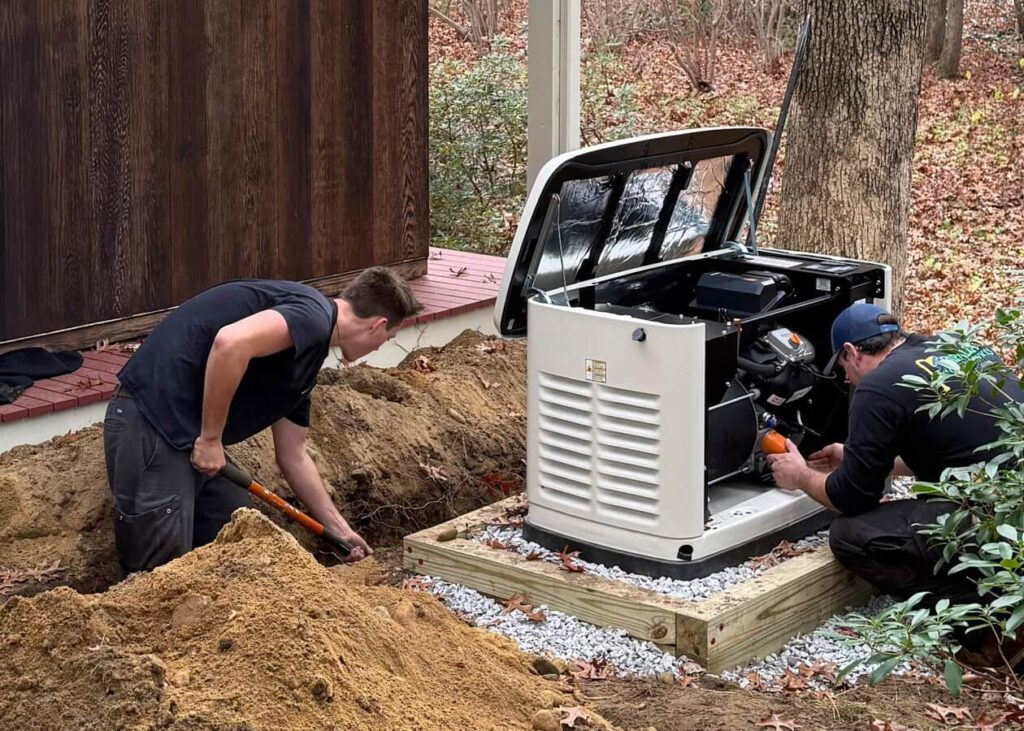
- Pad and set: Pour pad or set prefabricated base; place generator with required clearances.
- Electrical integration: Install ATS, conductors, conduits, grounding, and labeling.
- Start‑up and testing: Verify gas pressure, perform start‑up procedures, simulate outage, test load management.
- Owner orientation: Cover weekly exercise, alerts, and maintenance schedule.
For detailed scope and what to expect, review: Generac generator installation in Oklahoma City.
Lifespan and Upkeep
- Service intervals: Change oil and filters per run hours or annually.
- Battery: Replace every 2–4 years depending on climate and runtime.
- Air intake and enclosure: Keep clearance from shrubs; remove debris.
- Cold weather: Use correct oil weight and cold‑weather kits where appropriate.
- Exercise cycle: Weekly self‑test keeps the system ready and lubricated.
Well‑maintained units typically operate 10–15+ years. Plan annual checkups before peak storm seasons.
Portable vs. Standby Generators
| Feature | Portable | Standby (Generac) |
|---|---|---|
| Start/transfer | Manual | Automatic via ATS (seconds) |
| Fuel | Gasoline (manual refuel) | Natural gas/propane (no refuel trips) |
| Capacity | Limited circuits | Essential or whole‑home/business |
| Safety | CO risk; extension cords | Hard‑wired; outdoor enclosure |
| Noise | Higher, variable | Engineered for residential/commercial |
| Runtime | Short (fuel‑limited) | Extended (utility‑grade) |
| Resale/Value | Low property impact | Adds marketability and value |
Portable units help in short outages but do not provide seamless, code‑compliant whole‑property protection.
Curb Appeal and Property Value
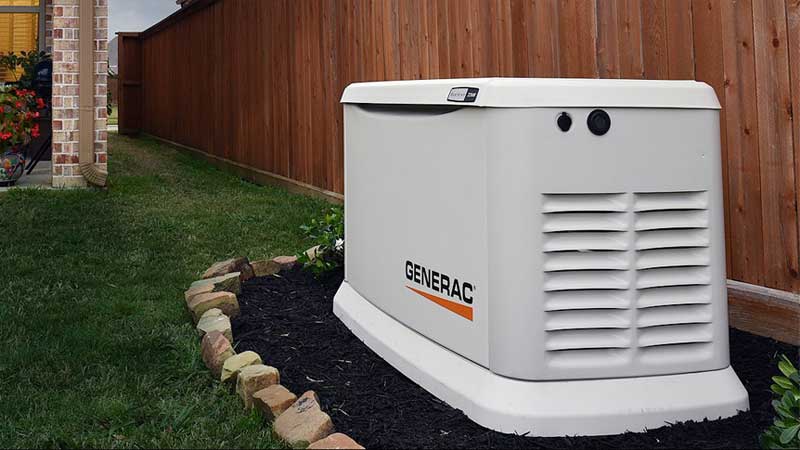
- Appearance: A low‑profile enclosure with proper placement blends with landscaping.
- Buyer confidence: Documented standby power reduces perceived risk and supports resale.
- HOA and zoning: Follow setback rules, decibel limits, and screen with approved landscaping.
Costs and Budgeting
Costs vary with size, ATS type, gas line complexity, and panel upgrades. Below are typical ranges (illustrative):
| Line Item | Home (Air‑Cooled) | Business (Liquid‑Cooled) |
|---|---|---|
| Generator + ATS | $4,500–$8,500 | $12,000–$45,000+ |
| Concrete pad/base | $300–$800 | $800–$2,000 |
| Electrical integration | $1,500–$3,500 | $4,000–$12,000+ |
| Gas line/tank work | $600–$2,000 | $1,500–$6,000+ |
| Permits/inspections | $150–$600 | $400–$1,500 |
| Startup/test/commission | $250–$700 | $600–$1,500 |
Annual maintenance (oil, filters, inspection) typically ranges $200–$450 for air‑cooled and higher for liquid‑cooled, depending on runtime and parts.
Ways to manage cost
- Essential‑circuit strategy with load management instead of full whole‑home sizing
- Plan gas line upgrades alongside other mechanical work
- Schedule before peak storm months to avoid surge demand premiums
When to Call a Pro
Standby systems integrate electrical, gas, and code compliance. Hire licensed, insured electricians with generator experience and manufacturer certifications.
How to evaluate bids
- Certifications: Generac training and local licensing
- Scope clarity: ATS type, conductors, pad, gas work, permits, inspections
- Load calculation: Documented method, circuit list, and any load management plan
- Panel notes: Identify required upgrades or corrections
- Warranty and service: Parts/labor details and response times
Common pitfalls to avoid
- Undersized gas meters or regulators causing nuisance shutdowns
- Poor generator placement leading to recirculation or noise issues
- Improper grounding/bonding
- Skipping load management when the budget doesn’t allow for a larger unit
Why Generac Leads in OKC
- Proven run reliability during ice and heat events
- Scalable lineup from homes to multi‑tenant commercial spaces
- Service network and parts availability during peak demand
- Smart ATS and load management that stretch capacity without lifestyle sacrifices
If your goal is a consistent, low‑touch solution for outages, a Generac generator Oklahoma City deployment aligns with both reliability and total cost of ownership.
FAQs
How fast does a standby generator start?
Typically within 10–30 seconds after utility failure, depending on ATS settings.
Can I power my whole home?
Yes, with a correctly sized generator and whole‑home ATS. Many homes use essential‑circuit plus load management as a cost‑efficient alternative.
Natural gas or propane?
Natural gas offers unlimited runtime if available. Propane works well for rural or large‑lot properties; size the tank for multi‑day events.
How loud is a standby generator?
Air‑cooled residential units are engineered for neighborhoods. Liquid‑cooled units are designed to run quieter at higher loads. Proper placement and orientation reduce perceived noise.
What maintenance is required?
Annual service: oil, filter, inspection, battery health check, and firmware updates where applicable.
Conclusion
Oklahoma’s weather demands a dependable backup plan. Generac’s lineup, ATS intelligence, and service ecosystem make it the practical choice for homes and businesses that need seamless power during storms and heat waves. Plan the right size, confirm panel and gas details, and follow a clean installation and maintenance schedule.
For a tailored plan and certified installation support across the OKC metro, contact HotRod’s Electrical Services.
Ready for Reliable Backup Power?
