
Ultimate Guide to Generac Generator Installation in Oklahoma City (Costs, Sizing, Permits & Maintenance)
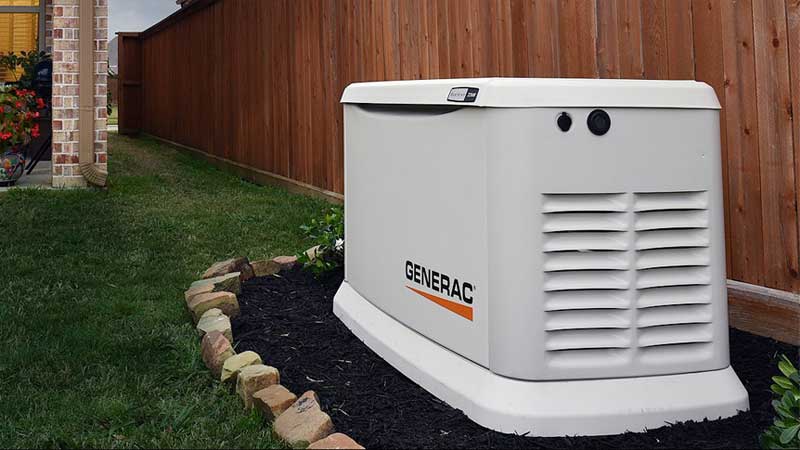
Oklahoma weather is hard on the grid. If you want reliable backup power for your home or business, this guide gives you clear answers. It covers costs, sizing, permits, installation steps, and upkeep so you can plan with confidence. For local help, HotRod’s Electrical Services installs and services Generac standby generators across OKC.
If you’re comparing brands, fuel options, or long-term maintenance needs, talking with a specialist who regularly installs systems built for local storms can save you time and hassle. A quick consultation with pros experienced in Generac generator Oklahoma City setups can help you choose the right size, understand real installation timelines, and avoid costly permitting mistakes.
If you are planning generator installation oklahoma city, use this Q&A resource to avoid delays and surprise costs.
- Why generators matter in Oklahoma
- Standby vs portable comparison
- How Generac systems work
- Right-size calculations
- Air-cooled vs liquid-cooled units
- Cost and budgeting breakdown
- Permits, codes, and inspections
- Step-by-step installation process
- Panel upgrades and wiring readiness
- Maintenance schedules
- Storm prep and safety
- Home value and financing
- How to hire a certified electrician
Generac generator Oklahoma City
Generac standby systems keep your essentials on during outages. In OKC, outages often follow tornadoes, ice storms, high wind, and summer grid strain. A properly sized system turns on within seconds, powers your chosen circuits or the whole building, and runs as long as it has fuel.
Q: Why do Oklahoma properties need standby generators?
A: Oklahoma sees frequent severe weather and grid stress. That leads to outages from minutes to days. Examples:
- Tornado season brings high winds and debris that damage lines.
- Late fall and winter ice storms cause heavy limb breakage and prolonged outages.
- Summer heat strains transformers and substations.
- Rural runs have longer restoration times due to distance and access.
Standby generators protect refrigerated inventory, critical electronics, security systems, medical devices, and sump pumps. They also keep HVAC and well pumps running.
Q: How does a Generac standby generator work?
A: A Generac system monitors utility power. When it senses an outage, it starts the engine, then the automatic transfer switch (ATS) shifts your selected loads to generator power. When utility returns, the ATS switches back and the generator cools down and stops.
- Fuel options: Natural gas or propane. Natural gas offers continuous supply. Propane uses an onsite tank.
- Start time: About 10 to 20 seconds from outage to power.
- Automation: Weekly self-test, remote monitoring options, and load management modules if needed.
- Transfer switch types: Service-rated ATS for whole-home or whole-building. Load-side ATS for selected circuits.
Q: Standby vs portable generator. Which is better?
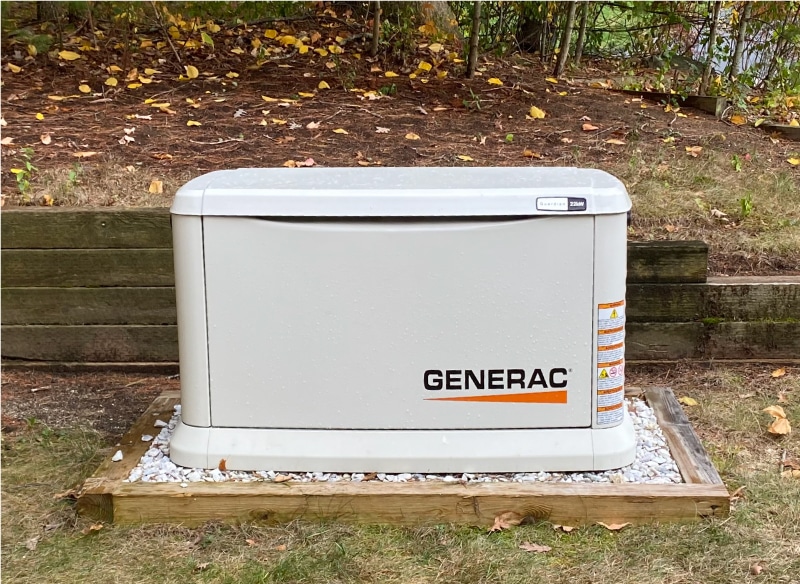
A: It depends on your goals, safety, and budget.
| Feature | Standby (Generac) | Portable |
|---|---|---|
| Power capacity | 10–150 kW+ | 1–10 kW typical |
| Start/operation | Automatic, hands-off | Manual setup and refueling |
| Fuel | Natural gas or propane | Gasoline or propane, frequent refills |
| Safety | Outside on a pad, bonded, code-compliant | CO risk if misused, extension cord hazards |
| Noise | Quieter, weather enclosure | Louder, open-frame common |
| Cost | Higher upfront, lower hassle | Lower upfront, higher manual effort |
| Ideal use | Whole-home, business continuity | Short outages, a few circuits |
Q: How do you size a Generac generator for your property?
A: Match generator capacity to your running loads and largest starting loads.
- List your critical circuits: HVAC, fridge/freezer, well pump, sump pump, lights, internet, security, point-of-sale, servers.
- Find running watts and starting watts. HVAC, compressors, and pumps have higher start surges.
- Decide on whole-home vs essential circuits only.
- Choose a generator with at least 20 percent headroom for surges and future loads.
| Load example | Running watts | Starting watts |
|---|---|---|
| 3-ton AC or heat pump | 3,500 | 7,000–9,000 |
| Gas furnace blower | 600–800 | 1,200–1,500 |
| Well pump 1 HP | 1,000 | 2,400–3,000 |
| Refrigerator | 150–300 | 600–1,200 |
| Lights, outlets, router | 300–800 | 300–800 |
Quick examples:
- Essentials home with gas heat, one AC, fridge, lights, router, and a well pump: 14–18 kW.
- Average 2,500 sq ft home, two HVAC units, electric oven, and essential circuits: 18–24 kW.
- Small retail with POS, lights, coolers, and one HVAC: 20–30 kW based on cooler count.
- Server room or medical device loads often need load management or a larger unit.
Q: What types of Generac units are available?
A: Two main categories.
| Type | Best for | Notes |
|---|---|---|
| Air-cooled | Most homes and light commercial | 10–26 kW typical, cost-effective, compact footprint |
| Liquid-cooled | Larger homes, multi-HVAC, commercial | 25–150 kW+, higher duty cycle, quieter under heavy load |
Q: How much does installation cost in OKC?
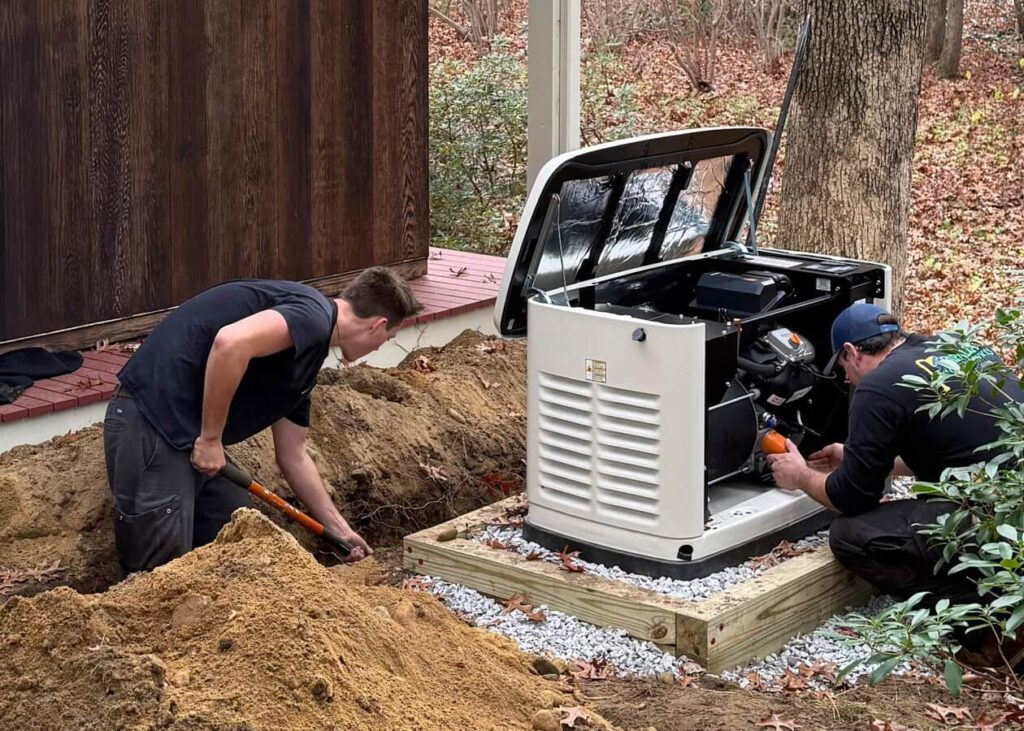
A: Price depends on capacity, gas line distance, electrical complexity, concrete pad, and permitting. Typical ranges for OKC:
| Item | Typical range |
|---|---|
| Generator unit (14–22 kW air-cooled) | $3,800–$6,500 |
| Automatic transfer switch | $700–$1,600 |
| Concrete pad or composite base | $300–$900 |
| Gas line, regulator, meter upgrade if needed | $800–$2,500 |
| Electrical labor and materials | $1,800–$4,500 |
| Permits and inspections | $150–$600 |
| Startup, testing, and training | $150–$400 |
Installed totals: Many Oklahoma homes land between $7,500 and $12,000 for a 14–22 kW system. Larger or complex jobs can exceed $15,000. For accurate pricing on generator installation oklahoma city, get a written site-specific proposal.
Q: What permits and approvals are required?
A: Most OKC projects need these:
- Electrical permit for ATS, wiring, and interconnection.
- Mechanical or gas permit for fuel piping and regulators.
- Utility coordination for gas meter sizing or upgrade. You may need electric utility notification for service-rated ATS work.
- HOA approval if applicable for placement and screening.
- Final inspections by city or county, plus utility sign-off if required.
Placement must meet clearances from windows, doors, meters, and vents. The unit must sit on a stable pad, be level, and meet setback rules.
Q: What is the generator installation process?
A: A standard project follows these steps:
- Site evaluation: Load review, panel location, gas meter capacity, routing, and placement with proper clearances.
- Proposal and scope: Model, ATS type, circuits, pad type, line lengths, trenching if needed, and total price.
- Permits: Electrical and gas permits, plus HOA approval if required.
- Pad and placement: Pour or set pad. Place and anchor generator. Confirm level and drainage away from the unit.
- Gas work: Pipe sizing, regulator, leak test, and tie-in. Verify meter capacity at required BTU draw.
- Electrical work: Install ATS, breakers, conduit, conductors, load management modules if used, and proper bonding and grounding.
- Startup: Fuel test, battery and oil check, programming, and load test under real circuits.
- Inspection: City or county inspection, then final walkthrough and owner training.
Schedule from signed proposal to final test often runs 2 to 6 weeks, depending on permits, utility work, and weather. Planning ahead speeds up generator installation oklahoma city.
Q: Do you need an electrical panel upgrade?
A: You might if you have a crowded panel, frequent breaker trips, or older equipment. Signs:
- Main panel is full or uses tandem breakers for space.
- Aluminum branch circuits or outdated panel brands.
- No main disconnect or low service size for your load.
Upgrading the panel improves safety, simplifies ATS integration, and sets you up for future loads like EV charging. For practical steps and safety checks, read these electrical tips from a trusted electrician in Oklahoma City.
Q: What maintenance do Generac standby generators need?
A: Routine service keeps the engine healthy and ensures reliable starts.
| Task | Interval | Notes |
|---|---|---|
| Visual inspection | Monthly | Check enclosure, debris, rodents, corrosion |
| Self-test verification | Weekly | Confirm unit completes exercise cycle |
| Oil and filter | Annually or 100–150 hours | Use recommended oil type and OEM filter |
| Air filter | Annually | Inspect sooner in dusty seasons |
| Spark plugs | Every 2 years | Replace if fouled or during heavy use |
| Battery test | Annually | Replace every 3–5 years |
| Software and controller check | Annually | Verify alerts, run logs, and settings |
Keep a clear 3-foot perimeter for airflow and service access. Trim vegetation and fix drainage issues that leave standing water near the pad.
Q: How should you prepare for storms and operate safely?
A: Simple steps reduce risk and downtime.
- Test before storm season. Run a 10–15 minute load test.
- Store spare oil, filters, and a battery maintainer.
- Keep the propane tank filled to an agreed target if propane-fueled.
- Never block vents or louvers. Maintain clearance from windows and doors.
- Use surge protection for sensitive electronics.
- Do not backfeed through a dryer or range outlet. Use a code-compliant ATS only.
Review more safety steps, placement guidelines, and photos on Generac generator installation in Oklahoma City.
Q: Does a standby generator add home value?
A: Yes, in many cases. Buyers value proven backup power. In outage-prone areas, agents report faster sales and higher offer strength. Resale impact varies by neighborhood and unit size, but many homeowners see partial cost recovery at sale. Some appraisers note value increases when the system is permitted, documented, and recently serviced.
For businesses, standby power protects revenue, inventory, and brand trust. One avoided spoilage event can cover a large share of the system cost.
Q: How can you finance a generator?
A: Common options:
| Option | Pros | Considerations |
|---|---|---|
| Home equity line or loan | Lower rates, longer terms | Requires equity and underwriting |
| Personal loan | Fast approvals | Higher rates than secured loans |
| Credit card promo | 0 percent intro offers possible | Short promo window, high APR after |
| Contractor financing | Streamlined application | Compare APR and fees with bank options |
Ask for line-item proposals so you can finance the equipment and installation together or separately.
Q: When and how should you hire a certified electrician?
A: Hire early. A licensed electrician coordinates permits, gas capacity checks, code clearances, and utility steps. Use this checklist to compare quotes:
- License and insurance in Oklahoma. Worker’s comp and liability coverage.
- Generac training or certification. Recent local installs you can verify.
- Written load calculation and sizing rationale.
- ATS type and location explained with a one-line diagram.
- All permits and inspections included, with timelines.
- Gas line sizing, regulator spec, and meter capacity verification.
- Pad type, trenching details, and restoration scope if applicable.
- Startup, owner training, and first service visit options.
- Warranty coverage and response time for service calls.
- Clear payment schedule, no hidden fees.
Ask each bidder to state total cost, allowances for unknowns, and change order rates. This makes generator installation oklahoma city quotes easy to compare.
Q: What are common placement and code tips for OKC?
A: Follow these practical rules:
- Place the unit outside on a level pad with proper drainage.
- Maintain clearances from openings, meters, and property lines per code and manufacturer.
- Bonding and grounding must meet the NEC and local amendments.
- Coordinate with the gas utility early if meter upgrades are probable.
- Label panels and transfer equipment so family or staff can operate safely.
Q: What mistakes should you avoid?
A:
- Undersizing the unit, which causes nuisance trips and poor HVAC performance.
- Skipping permits. This can block resale and insurance claims.
- Poor placement that violates clearances or floods during storms.
- No load management on multi-HVAC homes when needed.
- Neglecting maintenance, especially battery and oil changes.
Q: What documentation should you keep?
A: Save these items in one folder:
- Permit numbers, inspection approvals, and utility confirmations.
- One-line diagram and panel schedules.
- Warranty papers and startup checklist.
- Service logs, oil and filter receipts, and battery records.
- Operation manual and emergency contact numbers.
Conclusion
A correctly sized and installed Generac standby generator keeps your home or business running during Oklahoma outages. It protects comfort, inventory, and operations with automatic power and safe transfer. For design, permits, installation, and service in OKC, contact HotRod’s Electrical Services.
Request Your Free Generator Quote Today
